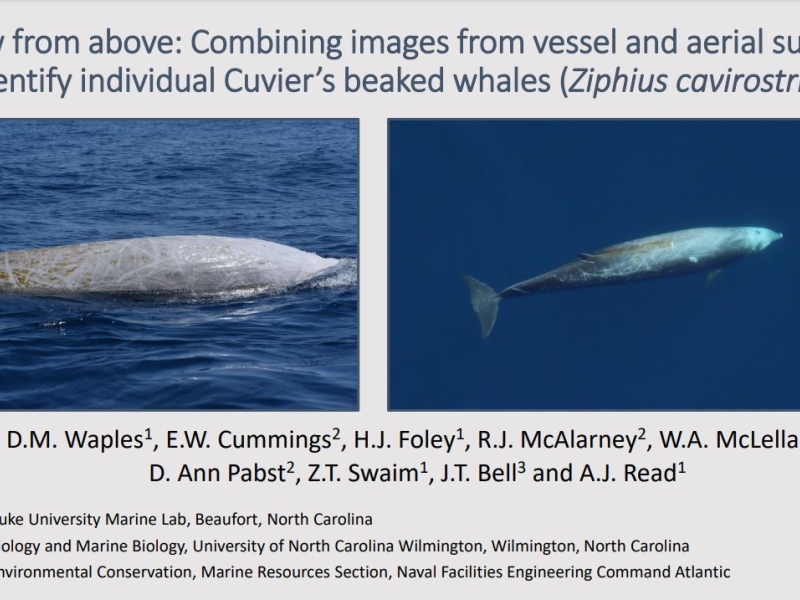

Long-term monitoring of Ziphius cavirostris behavior using 3D tracking from fixed hydrophone arrays off Southern California.
Scientific Reports. 2025.
15: 40859 (2025)
More details
Collapse details
Date Published:
- November 19, 2025
Vessel strike encounter risk model informs mortality risk for endangered North Atlantic right whales along the United States east coast.
Scientific Reports. 2025.
736 (2025). https://doi.org/10.1038/s41598-024-84886-z
More details
Collapse details
Date Published:
- January 3, 2025
Long-term passive acoustic recordings track the changing distribution of North Atlantic right whales (Eubalaena glacialis) from 2004 to 2014.
Scientific Reports. 2017.
7:13460
More details
Collapse details
Date Published:
- October 18, 2017
More details
Collapse details
Date Published:
Publication:Ocean:Region:Methods:
- May 13, 2025
Passive acoustic monitoring (PAM) is a key technology for studying marine mammal populations. PAM typically generates large volumes of data that contain signals from multiple overlapping sources. To extract meaningful information from these data, automated tools are required that can cope with multiple sources, missed detections, and false alarms. This paper presents the Multiple-Animal Model-Based Acoustic Tracking (MAMBAT) framework, which integrates model-based localization with Bayesian multi-target tracking to automatically track multiple sound sources using acoustic data from wide baseline arrays. MAMBAT leverages a “Track-before-Localize” strategy followed by a “Localize-then-Track” strategy that does not require detection, classification, or association steps. The framework’s effectiveness is demonstrated through application to real-world datasets that contain multiple sperm whales from two ocean basins. MAMBAT advances our ability to monitor marine mammal distribution, abundance, and behavior, with potential to provide valuable information for conservation and management efforts.
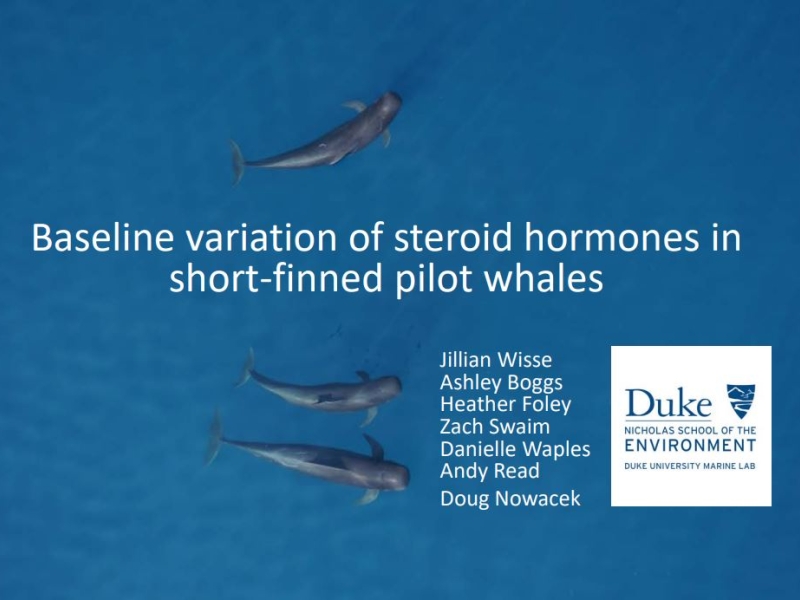
Hidden Markov models reveal complexity in the diving behaviour of short-finned pilot whales.
Scientific Reports. 2017.
7:45765
More details
Collapse details
Date Published:
Publication:Ocean:Region:Species:Methods:
- March 31, 2017
Diving behaviour of short-finned pilot whales is often described by two states; deep foraging and shallow, non-foraging dives. However, this simple classification system ignores much of the variation that occurs during subsurface periods. We used multi-state hidden Markov models (HMM) to characterize states of diving behaviour and the transitions between states in short-finned pilot whales. We used three parameters (number of buzzes, maximum dive depth and duration) measured in 259 dives by digital acoustic recording tags (DTAGs) deployed on 20 individual whales off Cape Hatteras, North Carolina, USA. The HMM identified a four-state model as the best descriptor of diving behaviour. The state-dependent distributions for the diving parameters showed variation between states, indicative of different diving behaviours. Transition probabilities were considerably higher for state persistence than state switching, indicating that dive types occurred in bouts. Our results indicate that subsurface behaviour in short-finned pilot whales is more complex than a simple dichotomy of deep and shallow diving states, and labelling all subsurface behaviour as deep dives or shallow dives discounts a significant amount of important variation. We discuss potential drivers of these patterns, including variation in foraging success, prey availability and selection, bathymetry, physiological constraints and socially mediated behaviour.
Complete
Acoustic Tagging of Green Sturgeon to Evaluate Habitat Use Along the Washington Coast
Project Objectives
With acoustic telemetry, determine 1) the location of green sturgeon detections within Washington, 2) the season for specific habitat use (e.g., estuaries; coastal waters), 3) the frequency an animal moves between coastal and estuarine waters, and 4) the range of each tagged animal.
Current
Atlantic Behavioral Response Study
Project Objectives
Assess behavioral response of beaked and pilot whales to mid-frequency tactical sonar
Complete
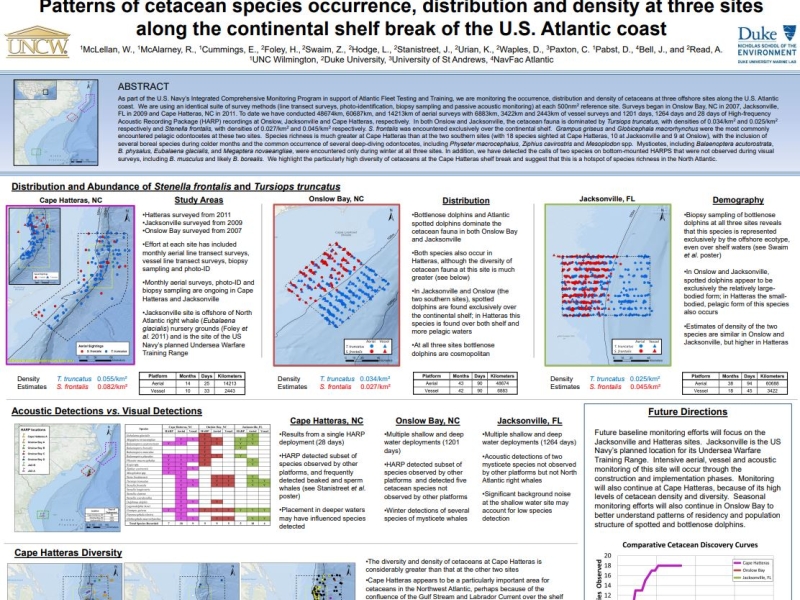
Baseline Monitoring for Marine Mammals in the East Coast Range Complexes (vessel surveys)
Project Objectives
Assess occurrence, habitat associations, and stock structure of marine mammals and sea turtles in key areas of Navy range complexes
Complete
Blue and Fin Whale Satellite Tagging
Project Objectives
Determine the movement patterns, occurrence, and residence times of blue whales and fin whales within U.S. Navy training and testing areas as well as Biologically Important Areas along the U.S. West Coast
Complete
Bottlenose Dolphin Occurrence in Estuarine and Coastal Waters near Panama City, Florida
Project Objectives
Determine species occurrence, and distribution, habitat use, and abundance of Tursiops in St. Andrew Bay and coastal waters adjacent to the Naval Surface Warfare Center, Panama City Division.
Complete
Characterizing the Distribution of ESA-listed Salmonids in Washington and Alaska
Project Objectives
Use acoustic tagging technology to provide critical information on spatial and temporal distribution of salmonids to inform salmon management, U.S. Navy activity, and Southern Resident Killer Whale (SRKW) conservation. The study seeks to 1) determine the occurrence and timing of salmonids within the Navy training ranges, 2) describe the influence of environmental covariates on salmonid occurrence; and, 3) describe the occurrence of salmonids in relation to SRKW distribution.
Current
Estimation of Received Levels of MFAS and Behavioral Response of Marine Mammals at PMRF
Project Objectives
Further our understanding of the Monitoring Questions: 1) What is the occurrence and estimated received levels of MFAS on 'blackfish', humpback, minke, sperm and Blainville's beaked whales within the PMRF instrumented range? and 2) What, if any, are the short term behavioral responses of 'blackfish,' humpback, minke, sperm and Blainville's beaked whales when exposed to MFAS/explosions at different levels/conditions at PMRF?
Current
Goose-Beaked Whale and Fin Whale Population Dynamics and Impact Assessment at the Southern California Offshore Antisubmarine Warfare Range (SOAR)
Project Objectives
Improve knowledge of baseline population demographics, vital rates, and movement patterns of Cuvier’s beaked whales and fin whales. Examine what, if any, short term behavioral and/or vocal responses occur when exposed to sonar or explosions at different levels and conditions. Determine if exposure to sonar or explosives impact the long term fitness and survival of individuals or the population, species, or stock
Complete
Guadalupe Fur Seal Satellite Tracking
Project Objectives
Determine the at-sea distribution of endangered Guadalupe fur seals and whether they travel through or utilize the offshore waters of the Southern California Range Complex and Northwest Training and Testing area
Current
Gulf of Alaska Acoustic Moorings and Analysis
Project Objectives
Conduct systematic line transect survey for marine mammals for density estimates; conduct survey to determine ecotype identity of killer whales; analyze existing and newly collected data for seasonal occurrence, abundance, and density of cetacean
Current
Jacksonville Shallow Water Training Range Vessel Surveys and M3R Species Verifications
Project Objectives
Monitor species composition and distribution on JSWTR, support M3R species verifications
Complete
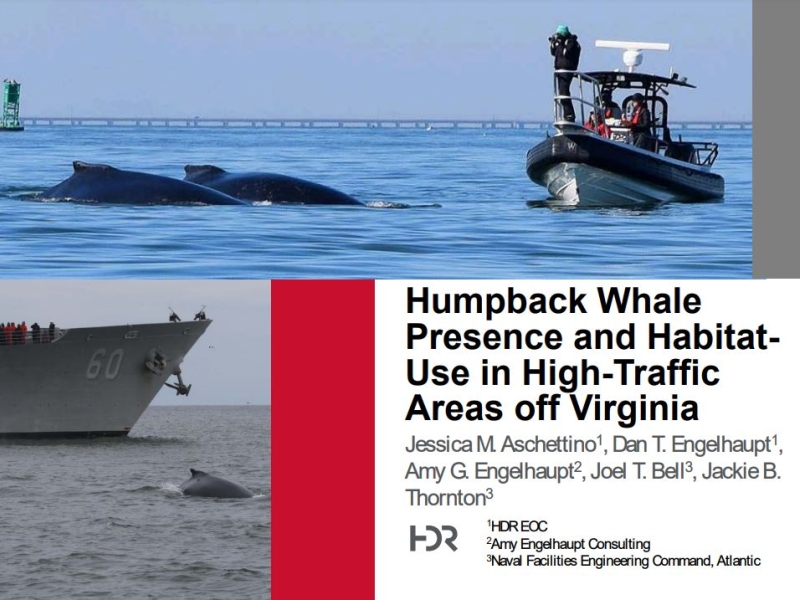
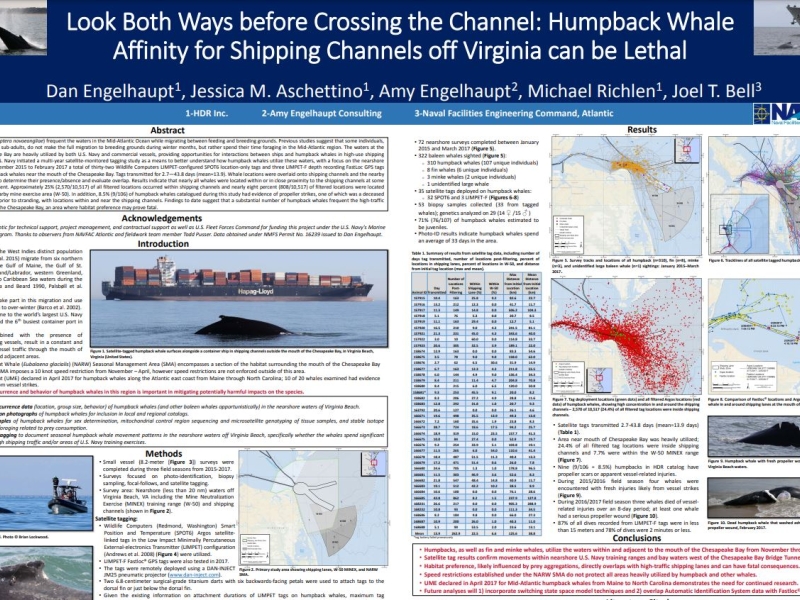
Mid-Atlantic Humpback Whale Monitoring
Project Objectives
Assess occurrence, habitat use, and baseline behavior of humpback whales in the mid-Atlantic region
Current
Mid-Atlantic Nearshore & Mid-shelf Baleen Whale Monitoring
Project Objectives
Assess occurrence, habitat use, and baseline behavior of baleen whales in the mid-Atlantic region
Current
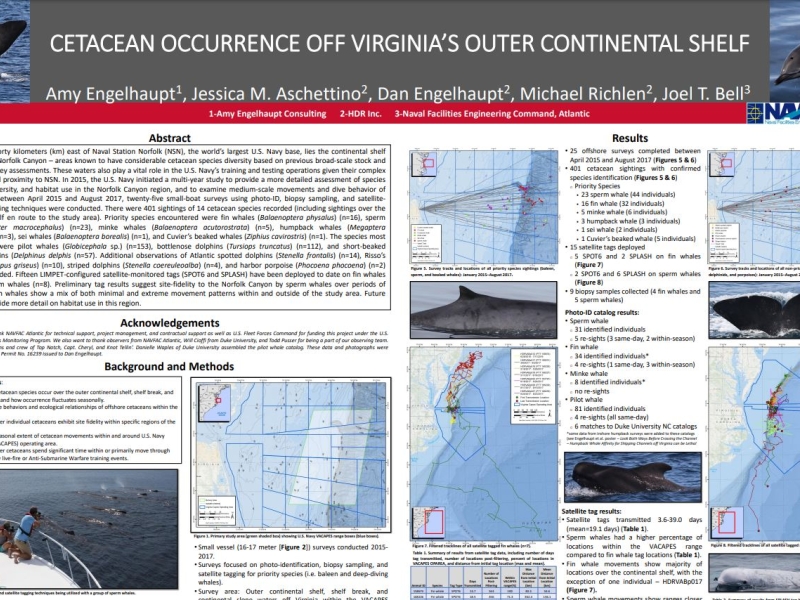
Mid-Atlantic Offshore Cetacean Study
Project Objectives
Assess occurrence, habitat use, and baseline behavior of cetaceans in the offshore and continental shelf break region of the VACAPES OPAREA
Complete
North Pacific Humpback Whale Tagging
Project Objectives
Determine the occurrence, movement patterns, and residency patterns of multiple humpback whale Distinct Population Segments within Pacific Ocean Navy Range Complexes
Complete
Occurrence, Ecology, and Behavior of Deep-diving Odontocetes
Project Objectives
Establish behavioral baseline and foraging ecology. Assess behavioral response to acoustic stimuli and Navy training activities
Current
Pacific Islands Comprehensive Stranding Investigations
Project Objectives
Conduct comprehensive investigations of stranded marine mammals throughout the Pacific Islands with emphasis on the Hawaiian and Mariana Island chains. This includes conducting necropsies of stranded animals, collecting and archiving samples, conducting disease screening, genetic testing, and analysis of historical data. The objective is to examine stranding patterns and causes of death for marine mammals in the Pacific Islands.
Complete
Pacific Islands Marine Mammal Stranding Diseases
Project Objectives
Determine cause of death when cetaceans strand to ensure accurate public understanding of stranding cause, with focus on infectious diseases
Current
Pacific Marine Assessment Program for Protected Species (PACMAPPS) survey
Project Objectives
Identify species of beaked whales, odontocetes, and baleen whales that occur in the surveyed areas; Monitor marine mammal and sea turtle presence, distribution, and diversity in offshore waters; Develop a better understanding of marine mammal distribution, movement patterns, habitat use, population structure, and abundance; Develop reference library of visually-validated acoustic recordings of marine mammals.
Current
Salmonid and Southern Resident Killer Whale Distribution in the Pacific Northwest
Project Objectives
1) Determine the occurrence of bull trout within and near the boundaries of the NWTT; 2) Determine the spatiotemporal occurrence of killer whale and baleen whale in the NWTT; 3) Characterize the occurrence of endangered fish species within the NWTT
Complete
Small vessel visual surveys in the Mariana Islands Range Complex
Project Objectives
Identify species of beaked whales, odontocetes, and baleen whales that occur in the Mariana Islands; Monitor marine mammal and sea turtle presence, distribution, and diversity in nearshore waters during key seasons (summer and winter); Develop a better understanding of marine mammal distribution, movement patterns, habitat use, population structure, and abundance; Develop reference library of visually-validated acoustic recordings of marine mammals.
Current
Telemetry and Genetic Identity of Chinook Salmon in Alaska
Project Objectives
To use a combination of pop-up satellite technology and salmon genetics to provide critical information on Chinook salmon spatial and temporal distribution in the Gulf of Alaska and along the Washington coast to inform salmon management and U.S. Navy training activities. The study seeks to 1) determine the occurrence, timing, and specific run of Chinook salmon through genetics within the Navy training areas; 2) describe the influence of environmental covariates on Chinook salmon occurrence; and 3) improve the understanding of run-specific timing and geographical occurrence of Chinook salmon as the prey of Southern Resident killer whales in Washington.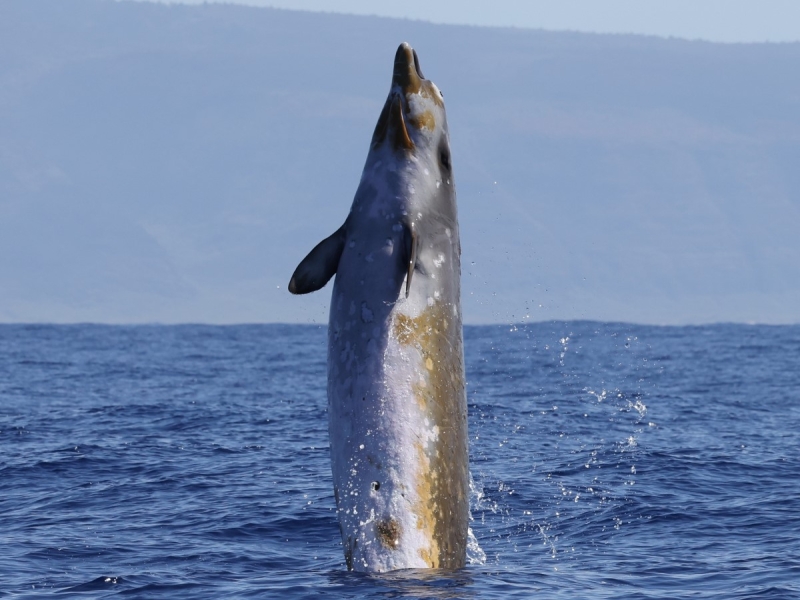
Kaua'i Field Work Updates
February 20, 2025
Scientists from Cascadia Research Collective recently completed a ~9-day field project off Kaua’i that started on February 9th. This project is timed to occur prior to a Submarine Command Course (SCC) training event. The primary goal is to deploy satellite telemetry tags on multiple species of odontocete cetaceans prior to the SCC, to be able to examine their behavior before, during, and after the event. This approach has been very successful in the past as a way of examining how different species respond to Navy training activities including mid-frequency active sonar (MFAS). Click through the picture below to see daily updates.
Back in the turtle tagging business
June 28, 2024
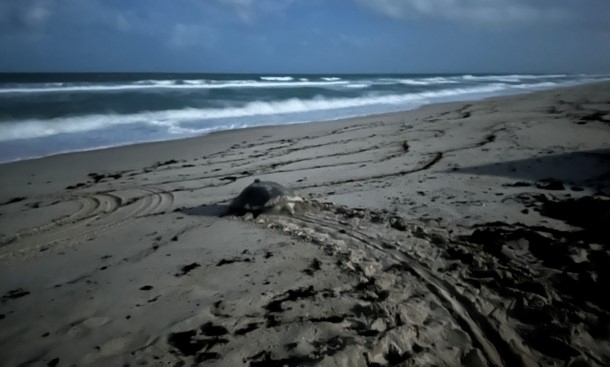
Researchers at the University of Central Florida (UCF), led by Dr. Kate Mansfield and supported by the UCF Marine Turtle Research Group and Andrew DiMatteo of CheloniData LLC, deployed five satellite-linked data loggers on adult nesting green turtles at the Archie Carr National Wildlife Refuge in Florida during the week of June 17th.
Mesoplodon mysterioso
June 13, 2024
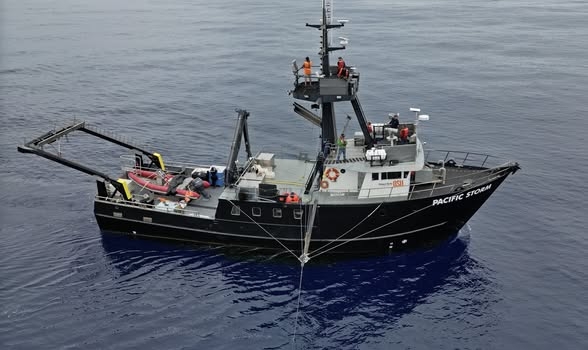
We are thrilled to be part of the "Mystery Mesoplodon Expedition" off the west coast of Baja California searching for an elusive new species of beaked whale. Read about the initial discovery and stay tuned for updates on this exciting expedition!